Gotta love ‘em. Trudging bravely on with their walkers and their canes, they have an air about them that is infectious. Laughter comes easily, as they navigate their fragile lives, grateful for their existence in a world that either treads gently around them or forges its way through. Never knowing if they are going to be treated with disdain or gentleness, they continue on. I find their courage contagious.
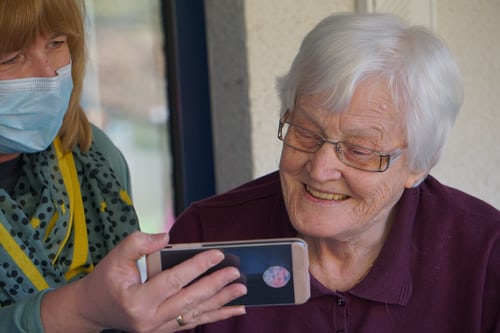
My Old Folk have been staying with me for the last week. They are both in their early eighties but their minds think otherwise, well my dad’s does anyway. My mum suffers from dementia and is continuously reminding me, and the stranger on the bus, that she is over eighty. It’s priceless and I wonder if this pride that comes out, this fascination, isn’t present in all elderly people and that as a collective, they don’t all perceive themselves as having arrived at an age that demands notice on their ability to have survived for as long as they have. There is a fascination, I believe, towards this. They can’t quite believe that they are at an age they once thought was very old.
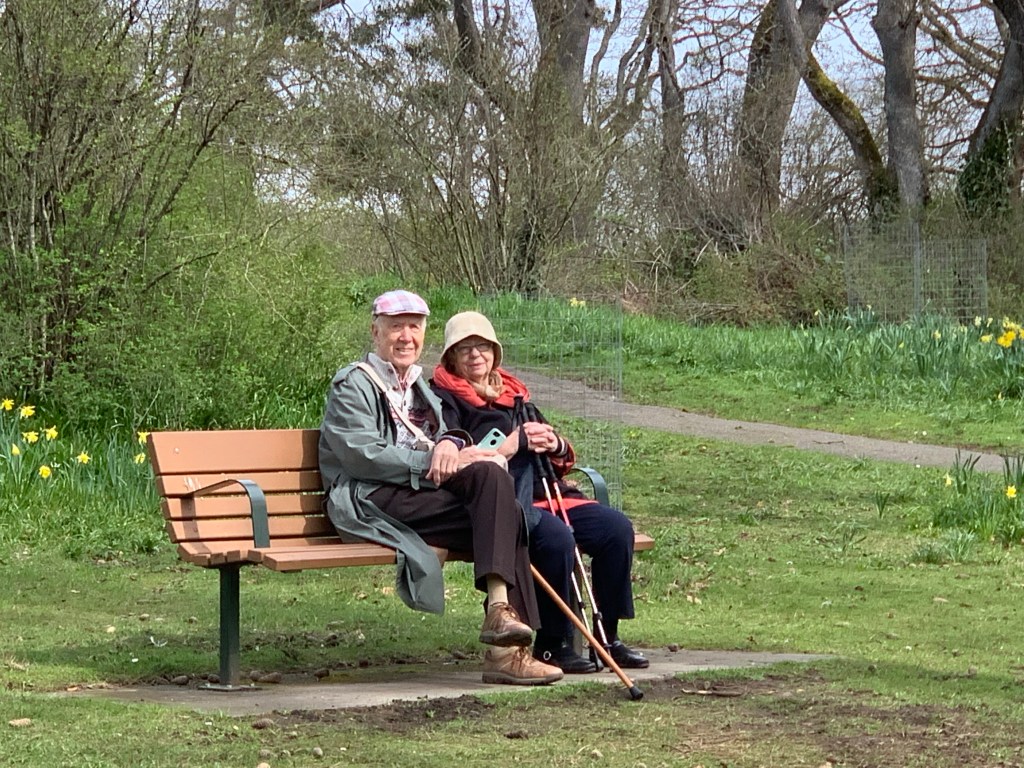
I’m reminded, everyday, that they were once children, adolescents, new parents, pioneers and middle-aged. They’ve lived in a world that developed the first bottle with a screw top to the Apple Wallet and they’ve handled it all with grace. Difficult grace, sometimes, but grace nonetheless. Yesterday, my Old Folk went to church; afterwards, they decided to walk through Beacon Hill Park to sit on a bench and watch the ducks and the turtles on the pond. We were to meet at a local pub at 2 pm and although they had more than an hour to pass, they preferred this rather than coming home first. I didn’t understand my father’s reasoning but it soon became apparent that this might be the last time they would have the opportunity to enjoy each other’s company in such a beautiful and nostalgic place. They passed the time walking, with their canes, from bench to bench. This endeavour absolutely nourished them. And I totally understand why!
I feel we need to highly respect our Old Folk; after all, they have lived before us, witnessing and experiencing changes in the world and within themselves. They have knowledge to share and their stories are fascinating if we only listen. I, personally, appreciate their wisdom and although they weren’t the perfect parents and I haven’t always appreciated their ways, they did their best and isn’t that all any of us can do? We, ourselves, have made tremendous mistakes with our kids and have hopefully learned, as we have aged ourselves, about our own weaknesses and imperfections. My Old Folk have taught me lessons through their mistakes and achievements and I have passed some of this onto the little people who have shaped my own life. We will continue to proceed with this self-awareness and will change also, one day becoming, hopefully, Old Folk ourselves, doing the best we can in an ever-changing world that we may not always be able to understand but trudging on regardless, finding the little things like the colours of the world, and discovering new understandings of what it is REALLY like to become old.
So, here’s a big THANK YOU to everyone who is, or are becoming, Old Folk. You’re the best you can be and that is good enough!
To live life to the fullest, I really believe that you have to love what you do and do what you love. But how do you find that balance in a world where making money is the most precious thing in our lives? And how do you choose passion over what society expects of you or what your parents, siblings, wife or husband thinks? I remember when I was 12 and in grade 7 that one of my subjects was instrumental music. I had played the piano since I was 8 so reading music wasn’t a problem and I aced that. But my parents forced me to play the flute and that did not sit well. I had always wanted to play the sax. I begged, I cried, but to no avail and maybe I failed on the flute on purpose, but I don’t think so as I still find it the most difficult instrument in my repertoire. Failing was not an option for me so they (my parents) begrudgingly caved and let me play the sax. The alto sax to be specific. I loved it and excelled! Instrumental music was to become one of the most precious things in my life, but I didn’t know it then.
We DO live in a world with expectations. There is status; there is keeping up with others; there is pleasing others; but when do our passions have a voice? How do we let them in when life is so busy throwing other things at us? In my early 20’s, I decided I wanted to write a book; my imagination possessed me. I was working at a hospital at the time, in housekeeping. It used to be called a janitor and I’m sure it boasts an even better title these days like sanitation expert, perhaps. Anyway, I was overcome with this desire to get my fiction on paper but I did not have a decent typewriter at the time–yes, this was the dark ages–so I would stay, after my shifts, at work where my boss had a very large IBM device (if you don’t know what I’m talking about, I invite you to google it) and write for hours. I hammered out more than 450 pages on that ancient piece of machinery and I used carbon copy to punch out two copies of my masterpiece. I was to later rewrite it onto a computer–where somehow I lost several chapters–and save it onto a disc (again, dark ages). To this day, it sits in a box as one of the few things I kept when selling my house. This story isn’t about the low self-esteem that kept me from sending my work out to publishers, it’s about finding space for the things you are passionate about.
I honestly believe that to live a fulfilling life we need to make room for our passions. Come alive in the NOW because we have no guarantee of the future. I find it difficult to listen to someone talk about their desires in the future tense. Once I have a house, I’ll have room for music; once I retire, I can begin to write, dance, sing, focus on my art works, photography etc.. Whatever you crave to do with your life doesn’t belong in later, sometime, eventually; it belongs in the present. I believe there has to be a balance in life to live your best life, an experience you can grab hold of and run with that brings out your best qualities and allows you to live completely. For me, that means writing, playing music, skiing, snowboarding, kayaking, helping others and being spontaneous (which is something I don’t do enough of). It also means being kind to myself and accepting myself as I am with the knowledge that I can also change. Loving yourself enough that you also DO what you love is as necessary as, well, brushing your teeth and changing your underwear.
Some people are fortunate enough to experience this in their life’s work as I was when I was teaching. Most people, though, need to cultivate passion into their busy work and family lives as I did when I wrote my novel. As difficult and dark as my life has been, I have had several opportunities to practice my passions and for this, I am forever grateful. Go out there and ‘Git ‘er done’. Grasp onto those dreams and run like the wind through the meadow of life. You deserve this. You are worthy.
I want to take some time today to talk about my own mental health journey. A never-ending exploration into my own mentality and a quest into my whole being. I’m approaching it with determination, passion and honesty. Most of all, I want to share it with others as I believe we are all in this together and that maybe a bit of what I’m learning and attempting to apply to my own wanderings through my heart, soul and mind might be helpful to others. I have been told that I am both a good writer and speaker so I’m using the strengths, gifts perhaps, that others profess to see in me to convey my story. I’m not fishing for more compliments; I am merely telling my truth (compliments scare me because I question their authenticity; but I want to believe them, so I am practicing that).
Since my early teens, I have questioned everything: authenticity, honesty, existentialism, hope, freedom and religion, to name a few! What I found were hypocrites, liars, doubt, despair, criminals and a very dark reality. I couldn’t believe in anything, even reality. In fact, I wasn’t sure what reality was. I dug a hole so deep and dark that suicide became my only option. I couldn’t bear to face another dark day in hell. I hated myself and my life–which to me, was nothing. I finally broke down in my 29th year. I’d spent 16 years of my life living on the cusp of suicide and, for the most part, in a living hell. Nothing meant anything anymore. I was completely lost and broken. Little did I know that I was going to spend the next 10 years clawing my way out of that deep despair.
I was hospitalized several times for my sins, as I believed them to be. I was a bad person, a failure, a disappointment, a pathetic excuse for a human being and for certain, a loser. I didn’t deserve to live. While in hospital the first time, I was involved in psychotherapy groups and individual counseling. I felt like an imposter. I just didn’t belong there, at least, not at first. After a few weeks of ‘incarceration’ as I sat, for the most part, silently, I began to realize that I was feeling safer with myself. The threat of taking my own life or sleeping forever was slowly dissipating and I began, for the first time ever, to feel as if I did belong. I began talking a bit more in therapy groups and in individual appointments until I was able to leave the institutional setting and set my sights on returning back to work. All this took more than 12 weeks. 3 months. It seemed like an eternity. I was to find out that eternity wasn’t even close and after being let go from work, I pursued therapy with a passion I hadn’t known before. I was dead set and determined to survive.
The psychiatrist I was seeing finally found a drug, after countless trials and errors, that worked. I took it faithfully and even when I was doing well, I still took it. I didn’t want to dive down towards death again. I worked hard at improving my self esteem, my fear of failure, my assertiveness and my whole outlook on life. At 39 years old I went back to school, received my B. Ed. and began teaching full-time at 40. I loved the work, the kids and my colleagues. Most importantly, I loved the extra-curricular activities like band, sports and directing musicals. I was in my zone! And then they took my antidepressant off the market. It caused liver failure; I had blood tests every month to check for this, but they still took it away from me. My descent was slow and steady. As I had in my 20’s, I tried to hide it away. We once again began the slow and arduous task of finding a suitable medication. Some worked better than others but nothing worked like my lifesaver. Then, in 2010, I received a “Key Contributor” award and I began my final descent. I was unworthy of this recognition. I was an imposter once again and I didn’t belong. I lasted until 2012; I was 49 going on 50 and I crashed.
I have worked on and off since then. I would return to the classroom only to be beaten down. I no longer ‘had it’. I couldn’t raise myself up to face a room full of adolescents who were struggling emotionally. I was a lost soul myself and ‘faking’ it no longer worked. My insecurities seeped through into my work and for the sake of the kids, I had to leave. This was painstakingly difficult. Even as I write this I am moved to tears. As a failure, once again, I withdrew into myself. The hospital became a norm for me as I bounced in and out. I believe my last stint was in February of 2020–just before Covid hit. As Covid sucked the life out of some, it breathed new life into me. I was no longer a strange person who isolated, as everyone was isolated. I no longer had to brave crowds as there were no crowds to brave. It was perfect. I was not alone. I wasn’t different. This lifestyle suited me just fine!
This brings me to my current situation. I traded my roommate for an emotional support dog and sold my house in August of 2020. That paid off all my debt, which was really nagging at me, and I moved into my trailer. For sure I had to downsize and it meant getting rid of a lot of ‘things’ I had accumulated. I began to realize that all these ‘material accumulations’— the books, the hockey cards, the mementos, even the thousands of pictures still in their envelopes and all my musical instruments–were just add-ons that held me back. They had had their use and now were of no importance. I kept one of my keyboards, two saxes and my guitar as well as all my converse high tops, but that’s about it. I had a huge garage sale that brought in more than enough cash to pay for the dumpster that I overfilled. I, then, began to live a life of freedom. I am now in my 60th year. I’m going skydiving on my birthday. The last concoction of meds are working and I have decided to work on my broken life. Maybe bring some light into the darkness. It wasn’t until I began reading Brene Brown’s books and listening to her Ted Talks that I really began my journey back to civilization. The thought and sound of ‘living authentically’ captures my attention and I haven’t stopped reading and working to cultivate more positive attitudes in my daily life. I am on a course of self-awareness that I have never been on before and it is taking me to new heights that include writing my blog and sharing it with others. I want to be an advocate for Mental Health and this is how I’m fulfilling that dream right now.
I want to thank each and every one of you for traveling with me. It is with joy, compassion and courage that I share my stories. As a final word I want to share, for a second time, my new mantra:
I will cultivate value, worth, respect, accountability and reflection into my life and apply it by integrating courage, compassion and connection into my thoughts, feelings and behaviours towards myself and others.
I think we could spend our whole lives comparing ourselves to others but it will really get us nowhere but into resentment. When we make comparisons, we are making more out of what we do or more out of what someone else is doing. In reality, we are all doing what we can to live our lives as honestly as we can. It may seem to us that others are doing better things than we are or that we are doing better things than others but that is not usually the case. Most people are doing the best they can with the knowledge of themselves they have. How deep a person delves into themselves may be felt on a different scale, but that doesn’t make anyone better than anyone else. If you tell yourself that you are (better than someone else) you are making a judgment based on your own knowledge of that person. I’m not sure if this is all making sense but I truly believe that people do the best they can with what they’ve got. Who sets out to be poorer than someone else, or less than what they are? Do you? I doubt it. Most people want to be the best they can be. Sticking ourselves into a line from bad to great, and placing other people onto that line also, is judgment. Plain and simple.
First of all, who are we to make that call? How do we honestly know what others are thinking unless, of course, they tell us. And even then, do we have a right to judge what they are doing? We might have the right to set our own boundaries with another person because of their actions or even their thoughts but do we have a right to judge? That’s a big negative for me. What I think about what someone else is doing or saying means I have the right to impose boundaries with that person but to judge them? I think not—for myself, anyway—because they are only responding to the perception of their own reality. Does this mean I’m completely non-judgmental? There’s another big negative for me, personally. I catch myself judging all the time! I’m trying to get a handle on it but it is so difficult, I find. In a world of comparisons and competition, how can one not be judgmental? Remember self-criticism can come into play here as well.
When we judge ourselves negatively by comparing our journey to someone elses and feeling as if we are failing, we are squandering our creativity and abundance in life. But what about judging others badly in comparison to us. I’m doing so much better than he/she is. Does this consume our own creativity also? I think it squanders our minds and our personal journeys. So, what about pride, then? What about feeling good about what you are accomplishing and hoping beyond hope that you are doing it well? When it comes to mental health, I believe these thoughts and feelings are justified. We need to feel good about what we are doing. We need to take pride in our successes. Pride is a difficult feeling for me. I think growing up in my family that pride was frowned upon as a sin. I have trouble taking pride in my work and applying it to my life. And too many compliments embarrass me, shame me. And yet, I can bask in them underneath all that shame; maybe that’s why I’m shamed in the first place. Just trying to figure shit out around shame and pride, for me, is a sensitive topic.
I think what it all comes down to is that judging myself and others is something I want to eliminate from my life. I don’t want to be judgmental. I want to be understanding and compassionate towards myself and others. And I want to try and live a life without comparisons. Not an easy task I have before me. But nobody ever said life was easy. It’s not. And living your best life, an authentic life means being okay with all the ups and downs, the heartaches and joyfulness, the light and the dark. All the polar opposites we come up against need to be accepted. And those we don’t understand? Actions we don’t agree with? Judgments made in darkness? Comparisons that consume our creativity? I guess we build boundaries, in some cases, and develop battle scars in others. But we keep on keeping on, trying to be our best selves in a world that tries its best to beat us down. Hey world! Not me! You won’t get me!
I can skip along in happiness but never be fulfilled; Joy does that. I can entertain happiness because of the events around me and my positive interaction with them but it is not joy. Do I need to be joyful? What, exactly, is the difference? Does it matter? If I’m happy, why do I also need to be joyful? Aren’t they really the same thing anyway? I am learning that ‘Happiness’ is extrinsic and ‘Joy’ is intrinsic. To be happy involves the interaction between external factors and things that help you feel happy. But it comes from a place outside of you. For example, the weather affects my happiness; I am happy when the sun comes out. Rain, on the other hand, has a disruptive pull on my mood and often brings me down. The only time rain ever brings me happiness occurs when I am grateful for it–as on long hot humid days or in the spring when its smell is like perfume to your soul. What I am actually experiencing at those times is pure joy. But, wait, what is the difference?
As I’m reading “The Gifts of Imperfection” by Brene Brown, I think the difference is likely in the gratitude. Because I am grateful for the rain, it doesn’t pull me down, instead it builds me up and I experience joy. It is joy because it is coming from an attitude inside me, I believe, that is grateful for the rain. Being grateful comes from inside us, but we have to actually act on it–I experience the rain in a positive frame that is connected to an inner feeling of gratitude and it brings me joy. I think another way of looking at this scenario is if I don’t bring gratitude to the table when it is sunny out; if, I am just glad it’s not raining but don’t bring gratitude for the sunshine, I will experience happiness; if, on the other hand, I am grateful for the sunshine and act on that gratitude by smiling up at the sun with my eyes closed and taking in its warmth and brightness on my closed eyelids, I experience joy! I think I can vouch for this, as a warm feeling consumes my body and my heart skips a beat.
Of course, we can’t be joyful all the time, well I don’t think we can and maybe it wouldn’t even be healthy; after all, one needs the lows in life in order to be grateful for the ‘highs’. Don’t we? What if we were grateful for the lows too? Why would we be grateful for the lows? Because it allows us to experience joy. We don’t know darkness if we don’t know light and vice versa. One doesn’t exist without the other. I guess, and this is just a thought, but, I guess if we lived in darkness, never experiencing the light, we wouldn’t know what we were missing. Life would just be dark–all the time. And although we often feel as if we spend our time mainly in the dark, we wouldn’t despise it as much as we do when we’ve known light. Does that make sense? What would happen, do you think, if we were thankful for the bad days? Would they have as much power over us? Would giving them voice and gratitude actually rebound them into a place of joy? I don’t know, but I’m going to give it a try the next time I’m down.
In the meantime, I think I am going to keep a Gratitude Journal; that is, I’m going to write down all the things I am grateful for during the course of a day. If I repeat myself, that is okay. I just want to test this theory out and see if it actually has an affect on my mood. I think, though, that I also need to practice the attitude of gratitude so I will be cognizant of that as I am rummaging through my daily thoughts.
Here is a topic I haven’t even touched upon in my quest for authenticity. I think because it can be such a painful emotion and needs company to share with. Grief can come about for more than the loss of a loved one. It attacks us in other ways also. One might feel grief about the loss of innocence because of sexual abuse. Or the loss of childhood because of emotional abuse. There is the loss of safety and trust that comes with physical abuse. There is also a loss of self because of neglect or varying types of abuse. Abuse seems to be the main theme here. If you were abused as a child or even as an adult, you have likely encountered a loss of some sort that needs addressing.
Some people may never have made the connection between the abuse and the sense of loss and ultimately grief but it is a very real experience that can cause a huge disruption in our lives. When we take a close look at grief we can see how it manifests in our lives through longing and intensifies through neglect. If we never acknowledge our pain, we are neglecting ourselves and our ability to be whole. Sometimes the longing is for experiences we have lost with a loved one because of death or separation of some sort (such as divorce). Experiences that were once shared are no longer celebrated together and sometimes can’t be experienced anymore at all. Grief includes all these losses and longings.
Grief can take on several different forms including emotional, physical, cognitive, behavioural, social, cultural, spiritual and philosophical. I am most interested in the emotional side, but it is good to be aware of these other manifestations that one could be dealing with. I think to understand that there are physical symptoms and cognitive developments of grief is also important as it allows us to explore both our behaviours and our thoughts.
So how do we tackle grief? I think, personally, that writing our feelings down can be extremely cathartic. I’ve written letters about my losses, in particular to my inner child whom as a child was unable to process some of the emotional and sexual abuse. I have also written letters to people that I have loved and lost, either by death or by separation. Sometimes, in fact, most times, we need to write several different letters in order to help with the healing process. This is just one way that I, personally, have been able to help my grief find a place on paper and get it ‘out there’ into the open. I don’t know that grief can ever be dealt with with an end in mind. It is something that lessens over time, but will always be there. I also think that different circumstances and individual capacities affect the way we deal with grief and how it develops in our minds, bodies and souls. Every person and situation is different. Never judge how a person responds to and deals with loss. They are on their own journey and are tackling their grief in their own way. Remember to always be kind and appreciate differences in response to loss.
The five emotional stages of grief as proposed by Elizabeth Kubler-Ross are denial, anger, bargaining, depression and acceptance. I think writing a letter, memoir or in a journal that deals with each of these stages could help us better tackle our grief. There are also grief counselors and many books written on grief. Finding others who have personal experience with similar losses as you can also help us understand what we are dealing with and going through. Here is a link to Brene Browns list of books on grief:
This will likely be more of a philosophical post than a psychological one but it is just as interesting a topic. A friend and I had a discussion this past Sunday night about whether or not we can be certain about anything. I love this type of dialogue as it is filled with arguments both for and against and ends with an acknowledgment of truth for both sides of the coin. I guess what it comes down to is whether we can be okay with uncertainty.
There are certain things one can be certain of. Facts that can not be refuted, for example. I have a warm place to come home to and a roof over my head right now. I have food in the refrigerator and seven pairs of converse to choose from (I have at least 50 pairs at my trailer). These statements are true and certain, at least right now. They are facts that can not be disputed. I think it is a good thing to be able to tell fact from fiction. It allows us, for instance, to check out our reality and to make decisions based on that reality. It opens the door to an observation of whether our feelings actually reflect how things are. This is in direct correlation with the ability to understand where our emotions are coming from and can be helpful when challenging their prominence in our lives.
Uncertainty, however, crosses the line of tangibility and is rampant in a world where most things are based on perception and gut feelings rather than truth. We live in an uncertain world. Especially right now; although, I believe that life has always been built around uncertainty. This becomes especially crucial when we are making decisions–such as, whether to sell a home or buy a new car, if we need to take an umbrella with us, whether to wear jeans or shorts or wear a sweater or a t-shirt (weather is so uncertain). LIFE is so uncertain! Are we okay with all this uncertainty? How do we learn to live an honest life amidst ambiguity? When do we acknowledge differing perceptions and ideas that aren’t based on fact? How do we even support authenticity amidst differing facts? What I hold as true can be different than your truth depending on from where our evidence emerged. Which one is true? Can they both be ambiguous?
We, as humans, crave certainty but we live in an uncertain world. How do we, then, adjust to the questionability of our realities? Most people, I believe, support the reality they fear the most or the least. I can’t be certain but fear is in there. For example, one of my biggest fears is of descending into depression again. The way it manifests itself in my life is mind-boggling and dangerous. I don’t want to go there again! But, I feel certain, I will. Unless I can change something HUGE in my life. That THING is shame, I believe. I have to tackle my shame. This is based on the uncertain belief that embarking on this journey will prevent me from falling into another deep depression. I fear depression more than I fear tackling shame; although, both could be dangerous. Thus uncertainty could prevent me from doing anything, but I am deciding to overcome fear and take a chance. “To get what you’ve never had, you must do what you’ve never done”. I’ve never embarked upon the journey of challenging my shame. I have, however, done nothing and ended up in hell.
We have to learn to brave uncertainty if we are going to live our lives with abandon. If we want to be truly happy, we can’t allow uncertainty to stop us from doing what thrills us or scares us. We have to take that giant leap and risk failure or losing faith. We step in ‘Certainly Uncertain’ and stand up to our fears, possibly crossing barriers we’ve never faced before, and stay strong!
Just a word before I begin. The following is my opinion. It is not a steadfast rule that I’ve read about or done research on.
I have talked, before, about sitting with your feelings curiously. It is something I’d like to talk about in a little more detail today because I believe it is at the cutting edge of digging deep into our feelings. It is cutting edge because it might be really painful. Therefore, one needs a lot of courage to go there. For this reason, I also think that answering the questions of curiosity needs to be done in a safe place, a planned excursion with yourself or someone with whom you feel comfortable. I, personally, do not want to tackle difficult anxiety while I am in the middle of the grocery store. In this arena, I want to acknowledge my anxiety, check the facts of whether there is really anything to be fearful of and then make a decision as to whether I will leave or stay. I might make a quick search of my thoughts before the anxiety had swept over me. Was someone staring at me funny or as what I perceived to be strangely? Why am I uncomfortable right now? Or, is this just an overwhelming reaction to being out in public? If I can find any ‘facts’ to support my anxious feelings, I will make note of it and plan to work through it in a safe place at a good time. I don’t need to do it right there. In this case, proven methods will work better, I believe; be curious but don’t fall headlong into the past.
Curiosity breeds questions and sometimes these questions begin to dive into the past. That’s when they can become dangerous. Some people, professionals even, don’t think going into the past is necessary for recovery, but I am not one of those people. I think it is totally necessary in order to really recover from persistent distressing feelings. Otherwise, I believe, we are merely scratching the surface with no need to come up for air. To really dig deep, one needs to nearly suffocate within the feeling and search for its roots, give the roots air and come back up ourselves for some before diving deep again. What do I mean by ‘giving roots air’? I liken the roots to deep wounds. Opening these wounds gives them air. Wounds need air to heal properly. Personally, I’m sick of always falling back into old patterns of behaviour because of past experiences. I want to air them out, tackle them and put them to rest.
There is a time and a place for all this ‘diving’. I think when we are in the depths of despair that we need some quick fixes like changing our thoughts and behaviours to change our feelings. I don’t think digging deep works very well when we are in the middle of living in pure hell. We are already deep into ourselves. We don’t need to dig deeper. But once we’re out of that hellish place, once we’re back on our feet and beginning to live life once again, I think we can begin to go back and tackle the feelings that sent us there in the first place. Some people might think, can’t I just stay where I’m feeling good for a while? Do I have to go back in there when I just dug myself out? I guess that is up to you, personally. Waiting, risks the danger of falling head first, without a life preserver, back into your darkness before you’ve had a chance to think curiously. Going in, however, life-jacket in hand, while you’re armed with assistance seems like a way to do it on your terms. I want to dig deep on ‘my’ terms. Under my own power with my own goals and plans built for success rather than failure; although, as with anything, failure is always possible. Personally, I’d rather plan my trip down under with all the tools and lessons at my disposal; all the help I need set in place before I take the dive, and do it consciously. It just makes sense to me. We all have to make our own decision eventually. Am I going to be controlled or am I going to be the controller?
Having said all that, remember that this is just my opinion and some food for thought. I wouldn’t go diving without knowing what I’m doing and sharing the experience with a trusted friend or therapist.
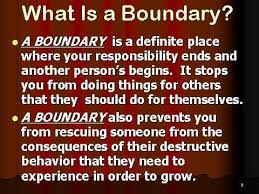
There are three ways to define boundaries. They are permeable, rigid and healthy. A permeable boundary is one that is easy to cross; there is very little substance to it. A rigid boundary is the exact opposite as it is like a brick wall that nothing can get through. Healthy boundaries, however, reflect what is important to us; it is a way to set limits in relationships dependent on our values and our need to stay safe. In my own life, I have waffled between loose (permeable) and rigid (brick wall) boundaries, often choosing the wrong type for the situation I find myself in. I am striving to change this.
When using permeable boundaries, one can become overly enmeshed with other people. Personally, I can get drawn into situations that are emotionally unsafe for me. My line is crossed because I didn’t protect it and I usually feel anxious or even angry and resentful. It is not the other person’s fault, it is mine. People need to be shown boundaries in order to respect them. If they don’t want to or don’t seem to understand, it must be made very clear, hopefully assertively. If they still refuse, maybe it is time to back off of that relationship or leave it completely depending on your values and ability to continuously assert yourself.
When using rigid (brick wall) boundaries, one can be closed off from other people. Relationships do not exist. It is a very lonely place but sometimes it feels better than having to set healthy boundaries. When I really struggled with assertiveness, I kept rigid boundaries. I didn’t know how else to stop people from getting in my space so I made sure no one got in. When envisioning a safe space, I was on an ocean beach with three high walls where the ocean wasn’t. I would tuck myself into a back corner; sometimes my inner child was with me (but I will save that story for a different day).
I have learned, over the past years, that healthy boundaries are mostly based on our values; what are those characteristics that we hold close to our hearts? By completing a few exercises in a workbook I found online, I came up with the following values for myself: to be valued, to feel worthy, to have and give respect, to be accountable, to be reflective, to make connections with others, to have the courage to share my stories, to show compassion and to use the thought/behaviour/feeling triangle as a basis for challenging difficult crises. I then made up my own “mission statement”.
I will cultivate value, worth, respect, accountability and reflection into my life and apply it by integrating courage, compassion and connection into my thoughts, feelings and behaviour towards myself and others.
It’s a bit of a mouthful, but it is clear to me and I think I can use it, embody it into my daily life to become a healthier, more productive, ‘me’. My healthy boundaries, then, protect this mantra. I’m going to include the link to the boundary workbook that I walked myself through as well as share a couple of pages that might help others set healthy boundaries also.
And here are the two pages that helped me to actually write down some boundaries and might be helpful for you to set your own boundaries if you also struggle in this area:
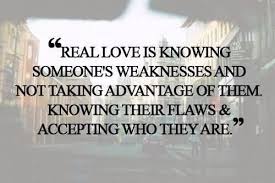
What does it really mean to love? How do we practice love towards others? How do we practice love towards ourselves? Can we love others without loving ourselves? The word love here is used as a verb. It is an action and, I believe, it can be professed as true love only as much as our actions support it. That is, we have to behave in love in order to actually profess our love. I think sometimes, the words, “I love you” are used too loosely. The actions that would support love–accepting someone as they are, unconditionally–are often lost within this extremely important affirmation. Love is not conditional on someone changing. If someone needs to change to be loved, they are merely ‘fitting in’. If we need to change in order to feel worthy of love from others, it is not true love. To really love someone is to accept them as they are, with all their faults and shortcomings, with all their ups and downs and, especially, with all their shame and vulnerability.
I looked for images of “Love” to include here and almost all of them say, “Love is Blind”. What does that even mean? To love blindly would be like never seeing the person you are loving for who they are, wouldn’t it? I don’t think love should be blind to a person’s shortcomings; I think it should be open to their faults and vulnerabilities and to love them regardless. That is how we practice love! Through acceptance. For someone to be worthy of love, they shouldn’t have to change. If they need to change, it is not true love. Having said that, it does not mean that those we love don’t need to be accountable for their own actions, thoughts and feelings, they do! Just as we need to be accountable for ours.
In my mind, the love we hold for ourselves has to be the same as the love we hold for others or it is not true love. We don’t really love ourselves if we feel we have to change in order to be accepted by others. That is just conforming to others or trying to fit in. It is not self love. In order to truly love ourselves, we need to acknowledge who we are with all our idiosyncrasies and step out into the world bravely, imperfectly! Yes, we will change as we grow but we don’t need to change to love ourselves or to be loved by others. We must, I believe, embrace our shortcomings, accept them, if we are to truly love ourselves. Can we do that? Is self love achievable? I think it is; although, I wouldn’t say I’m quite in the flow of it yet. This kind of love takes tremendous courage, I believe more bravery than it takes to love someone else. We are more critical of ourselves than we are of others! Practicing self love takes heroism to a new and critical level.
I was looking, again, at quotes for self love and I found many that consider “self love” as a prerequisite for loving others. I’m not sure I believe this; although, I could likely come up with arguments for both. Now, as I sit here contemplating this statement, I find myself questioning my own beliefs. I was of the mind that loving others wholeheartedly could be done without loving ourselves in the same way. I think of myself as an aunt and how much I love my nephews–especially when they were little–but how much I would chastise myself during that time. I was never good enough, brave enough or smart enough for myself, but I loved those boys as if they were my own and with every part of my soul. Now, as an afterthought, I have to wonder if I didn’t force some of my own degree of self-hate on them. I remember when they were twelve, I made up a binder of exercises they could do to build themselves up for hockey (they were both pretty good little hockey players). I think back now and wonder was it all too much at once? Did I overwhelm them with my enthusiasm for their little lives? It’s something I would have done for myself and expected myself to work through the entire binder in a week! If I had loved myself back then, would I have introduced them to a smaller, gentler approach? We will never know and I’m not going to beat myself up for it as I was only doing what I felt was right at the time. If one of them comes to me and blames me for their own lack of self-worth, I will honour their feelings but they are old enough to take responsibility for their own decisions now. I think we do the best we can for those we love unconditionally. While we’re always in a growth spurt ourselves, I guess we will make mistakes in the name of love. But we can’t allow those mistakes to control who we are now. We will always need to make amends as we are imperfect. I’ve gone off on a completely different tangent here and I apologize for dragging you all along.
So, I guess, the question is still up in the air, can we love others without loving ourselves? Yes, I’m asking!! What do you think? What are your stories? Thanks, Jaidan