Loneliness, Division, Fear and Humanity

I’m likely trying to uncover too much here, but, as with many of my blogs, we’ll see where it goes. I’m hoping to connect all these concepts into an intelligible conversation about the world we live in right now. I’ve been listening to Brene Brown’s “Braving the Wilderness”, studying Richard Schwartz’s Internal Family Systems and reading Debbie Ford’s “The Secret of the Shadow”. It’s a lot of literature to rumble with but it is definitely resonating with where I am in my journey right now. 

Maybe there is so much here because I’m feeling pulled different ways. This journey isn’t straight and narrow, it is fluid, flowing–-just like a river–and its twists and turns are like jumping out of an airplane–a full 200 km/hr in the face, the heart, the body. Like skydiving, over and over, there is the beauty and wonder of flying above the wavy beach–a new idea, creative process–stepping out onto that tiny step–the thrill and terror of a new endeavour–dropping from that step and into a full-blown wind tunnel–sucked in to get the juices flowing–floating smoothly and carelessly–taking in the wonder and the awe as one draws closer to understanding. I’m somewhere in the wind tunnel! Ideas are slapping me in the face. I need the parachute to come out so I can process where I’ve been. I need to land somewhere to appreciate where I’m going. And then, I need to fly again.

This is my parachute. I write to sort things out. To sit back and try to make sense of a nonsensical world. Possibly, there isn’t even a way to do this, but I try and maybe I get a bit closer to the truth, to my truth. Loneliness. When I discuss loneliness, I’m not talking about necessarilly being alone; although, this can and does impact the feeling of disconnection, there are many people who enjoy, and even relish, being alone. I think sitting with yourself and enjoying your own company is quite common among those who like and appreciate themselves. Is this our true sense of belonging? I think it is key to overcoming our own loneliness, whether we find ourselves in large groups, small groups or alone, if we have a good connection with all the parts (IFS) of ourselves and are open to communicating with those parts, giving them the voice they need within us, we can rise above loneliness and belong wherever we are–everywhere and nowhere. Personally, I am just beginning this journey. There is upheaval within me and out there in the big wide world. 

Division. As a society, we are often divided–political perspectives, religious followings and social class or economics. I have seen this discord thrive amidst COVID. The fear of illness (death) vs. the fear of government (tyranny). Both driven by fear. Sometimes it can bring us together, as it did at the beginning of this pandemic, but it often ends up in division. There is a general sense of dissonance amongst different cultures because of this fear. And then, there is the disunion of our internal parts, often, also, driven by fear. We have protective parts inside of us that go into overdrive to save us from the heartache of the dissonance outside of ourselves. We begin to actually fear connection, question trust and become isolated and lonely. Befriending our parts can assist in the combat that dwells within us. Once again, this is a personal odyssey that I am just beginning to partake in. 
We are not just one thing or another, but a multitude of feelings and reactions that change amidst circumstances. Embracing the humanity of all our parts can aid in combating the fear that lives within us and ultimately tame our suspicions of each other. When we can accept and acknowledge our own humanity, we can begin to understand and appreciate the humanity of others. There are 8 big “C’s” and 5 “P’s” to finding your SELF according to Richard Schwartz and his work with Internal Family Systems; they are: Courage…Compassion…Connection…Clarity…Confidence…Calm… Creativity and (my favourite) Curiosity, as well as Presence…Perspective…Patience… Persistence and Playfulness. Think on these for a moment. Give each one space to be observed. What do they mean to you? Applying all of these concepts to both our internal and external lives, I believe, makes space for acceptance of differences, opinions and perspectives amidst all of humanity. What if we’re not right or wrong, but somewhere in the middle? Is there room for that? Is there space for compassion for others and ourselves amidst all the fear? Does it have to be “us” and “them”? When will we embrace our humanity, our imperfection and our innate passion for kindness?

peace balance empathy

The Giant Leap of Awe and Wonder

As most of you know, yesterday I jumped out of a perfectly good plane. It was a small aircraft–a Cessna–with very little room. Four of us crammed into the tiny fuselage–me, my friend and two instructors. We bade farewell to the ground and began to climb. The ride was surprisingly smooth and as we gained more height, we began to see the wonders of the world below us. With very few clouds–most of them above us–we were able to scan the horizons and take in the beauty of creation. The long curved beach of Wasaga spread before us and we were awed by the natural aura of the farmland below. It signaled peace and tranquility. It wasn’t to last long.

The climb to 12,000 ft was soon to be over as my instructor opened the small door. My instructions were, “I will put one foot out onto the step and then you put both of yours out there.” Aagh! My God, I was scared. Cold air rushed through the plane and with my arms crossed across my chest, I followed my life support system out of the plane and onto the tiny bar just outside the door. It was terrifying and my face reflected this terror–I know, because I have the picture to prove it. Before I could count to three, we were somersaulting into the air. At least one flip, maybe two, and we were hurtling towards all those wonders below. I was given the okay to release my crossed arms and spread them out into the frigid air. A quick reminder to bend my knees up, and I cruised at 200 km/hr towards the ground. A smile spread on my face as I was finally able to let go of my fear and begin to appreciate this feat, taking it in. Apparently, I dropped for 30 seconds–try counting that slowly, right now–until the moment of truth began to slow me down.

The parachute tugged at my body and we began to drift. It was surreal. I don’t know how many feet we were above ground but a serenity of peace coursed through my veins and I was able, finally, to relax. I remember speaking, “this is so awesome”, as we floated towards the marvels below. The scenery was spectacular as we swung this way and that. Going around in a circle, it felt as if I was on a swing at a carnival except that the ground approached me. It was two and half minutes of pure bliss. And then we began our approach to the landing site. Trepidation hit me, but not the pure terror of stepping out of that plane; this was a minute fear in comparison and ultimately, in vain as I welcomed the surface below, my feet sliding along the grass with a satisfying feeling of grace.

Awe and wonder enveloped me as I watched my friend drift from the air to the ground. It was a great experience to share that thrills me, even now. I will be forever grateful for this experience of life within the throes of death. A big shout out to the team at Skydive Wasaga Beach and especially to my captain and my keeper who attached his body to mine and gave me the opportunity to experience the exhilaration, terror and veneration of life all at once. 

peace balance empathy

Jumping

Today, a good friend and I will be jumping out of a perfectly good airplane. Yes, we are going skydiving! It’s finally going to happen! Scheduled for my 60th birthday, it has been cancelled twice due to weather but today we will do it! 

What does this mean for me personally? Well, it’s one more thing to cross off my bucket list but that’s not the symbolic reason for doing it. Facing my fears? In a way,  but still not the deep seeded emotion that drives this endeavour. Exhilaration? Yes! For me it is a death defying action that feeds my need to face a reality I live with every day. I will die. It is inevitable. We all will. It is one of the only certain things we will do in our lives. 

How does one go about accepting this fate? Well, without it, I don’t think we would strive towards anything. We wouldn’t whittle away at life, facing it head on. We’d have too much time to accomplish things and appreciate life. I know that sounds like a great plan, but is it really? I’ll just leave that there for one to ponder.

I worry, a bit, about my expectations for this jump. I can only imagine the thrill of freefall for 30 seconds and maybe a flight through the clouds. 30 seconds is a hell of a long time when you think of falling–200 km/hr–for that length of time. Try counting in your head and conceptualise roaring through the air. I imagine the adrenaline rush will be blood-tingling, mind-boggling and hair-raising. I think the thrill will last for days, weeks even. I bungee-jumped the day I turned 30 and I was high for 2 weeks. Will this be the same? I will let you know tomorrow!

peace balance empathy

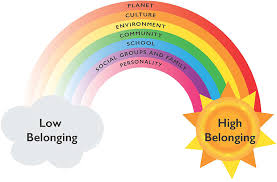
Real Belonging

I’m almost certain that each of us has experienced the feeling of not belonging–whether it be in some place or within certain groups. I know I have and am struggling with this part of my existence right now. It seems that I need to be inebriated or high to actually fit in and be accepted. But fitting in is not the same as belonging and being accepted for who I am not, goes against my core value of authenticity.

In Brene Brown’s book, Atlas of the Heart, there is a quote from an eighth grader. It says, “If I get to be me, I belong. If I have to be like you, I fit in.” Here’s a really brave question for ourselves, “Do I want others to be like me or do I want others to be themselves?” Let’s be honest here. I mean, I often judge others based on their personal journey and their core values. I don’t like this about myself; I want to change it; but, it’s a difficult thing to do. The personal journey of someone else is theirs and theirs alone. Who am I to judge that? Who am I to judge anyone? What I can do is hold myself accountable for my reaction to the core beliefs and values of someone else.

I don’t have to like them (other people’s core beliefs) but I need to respect them because respecting the journey of someone else is high on my own list of values. To be true to myself, I need to allow others the freedom of their own personal exploration of themselves. They may not be where I want them to be, but they are where they need to be. The reverse is also true for me. I need my own personal journey to be respected by others–especially those who are close to me. They don’t have to conform to my beliefs, but I feel they need to respect them if I am to feel a sense of true belonging with them. Otherwise, I feel disconnected and unsafe. When I feel this way, I don’t want to be around them. I want to hang with the people who believe in me for who I am, not for who they want me to be.

After listening to Brene Brown’s “Braving the Wilderness”, I have come to realize that in order for me to have a true sense of belonging with others that I need, first, to feel I belong with myself. Problem: I am my own worst critic. I think that, deeply, I respect my own journey, but it is difficult to outwardly profess this. The end result, though, if I can be okay with where I am, is that I will always belong. Let that sink in. To truly belong, we have to belong to ourselves first. Without this acceptance, appreciation and respect for ourselves, we will never experience the sense of true belonging with others. Whew! That’s a difficult concept to get my head around. That is where my work is right now. It is rarely out there that our progress needs attention, but within ourselves. Be okay with where you’re at. For me, right now, that is respecting my own values and beliefs. For you, it will be somewhere else, but it will almost always be within you. 

Watch out for it. Wait for it to slap you in the face and knock you down. Then brush yourself off and run with it. You are okay where you are! Just don’t get stuck there or your full potential will never be realized. Change is inevitable if we are life-long learners. But, maybe, that’s not your journey right now. Maybe you just need to be okay with you. Build a sense of belonging with yourself and you will begin to belong everywhere you go!

peace balance empathy
Practice

Life is full of it. Processing moments into hours, days, weeks and years. We are just practicing–all the time. There is always room for improvement. We will never be done while we are still alive. Does that sound like a heavy job? Does it sound tiring? Does it break your resilience? It might. If you let it. You are in control, afterall. Our attitude towards practice could very well define us. I’m not sure how far our character can be bound by our mindset or even if our character doesn’t actually effect our mindset. I DO, however, believe that the two are connected in some way.

That might sound confusing and I apologize for that. I’m usually a little more straightforward but practice comes in various packages based on our realities (which is a whole subject in and of itself). Maybe I can break it down a bit. I’m using attitude and mindset interchangeably which might clear some things up. I think what I’m trying to say is that our response to the idea of continuous practice is based on our mindset/attitude towards it. 

At this point in my life, I am practicing sobriety. My attitude towards that is based on my reality that I want to be authentic and, for me, that means maintaining an existence with as little distortion as possible. I don’t believe I will ever completely rid myself of misinterpretations but, once again, I am practicing and I want to have a clear head during this dress rehearsal.

So, the idea that practice is continuous, for me, is fortifying. I embrace it and run with it. It allows me to be who I am with all my indiscretions, realities and perspectives. And because I’m honing who I am, I’m changing. It becomes a response to the reality that presents itself to me at any given moment. One has to be open-minded, permeable and flexible in order to have an evolving life and attitude is everything. We need to check our responses and, sometimes, change our mindsets in order to grow our character. Practice doesn’t make perfect, but it does make us better than we were one second ago.

peace balance empathy

CBT–All or Nothing Thinking

Some of you will know how frightening it can be to stare at a blank page, knowing there are words that need to fill it and that those words are yours! I seem to be doing that right now. How do I organise the thoughts in my head and begin to write? You Start! So I did and this is what appeared:

Imagine Shades of Grey…not completely white and not completely black, but somewhere in the middle. I struggle with this quite a bit. It can be identified as All or Nothing thinking. An example could be “I am not trusting anyone” to “I am trusting everyone”. I’m sure you can see the problems this might create. One would be cutting off the world and the other would be honoring everything the world has to say. Both are problematic and the only change one can see would be converting to either extreme. But, if we can begin to think in Shades of Grey, we can give ourselves a window for change. Without this window, altering our perspective becomes very difficult and we can remain stuck in a pattern of thinking that is destructive to our well-being.

Think of that perfect relationship–with friends or a loved one. HELLO! It doesn’t exist! But if we think it does, we can be driven to the extreme of completely cutting off the ties with that person. Thinking in shades of grey grants us some sense of pleasure in these relationships, allowing us to live a more fulfilling and enjoyable life. We can also experience less bitterness and disappointment in our lives. Or imagine that perfect assignment/job/adventure; once again, it just doesn’t exist! We are laden with our humanity and with the humanity of others; humankind comes in whispers not in screams. Shades of Grey help us respond to existence and situations with the humility of imperfection.

In reflection, All or Nothing thinking stops us in our tracks. There is no allowance for the gift of being human–either with ourselves or others. We need to appreciate our own humanity before we can allow others the same experience. Give yourself a break and you will be able to do the same for others.

peace balance empathy

New Horizons

How do I begin again? I haven’t blogged since April and it is now the middle of July. How did I allow myself to get side-tracked? Why did I stop? This blog is important to me. I want to help others by sharing my stories. Even if only one person gets something out of it, I need to do this for me! It’s personal. I need to stop allowing the ‘reader over my shoulder’ to inhibit my perceptions and begin to be vulnerable again.

I have long believed that in order to begin again, you need to start. Just do it! As Nike would say. I always liked that message. JUST DO IT! Set aside the fears of criticism and allow the universe to be your guide. The biggy is: stop allowing other people’s opinions of what you are doing to control what you do!

Whose opinion matters to you? Who loves you for being you with all your imperfections? They don’t just accept you in spite of your imperfections but because of them. People who love your imperfections are the people whose opinion of you matters. These are the people whose feedback matters. I don’t think there are a lot of people in this category for me and I think that is okay. Who needs a lot of people anyway? A few–or maybe only one–are all we need. Why do we need to be cognizant of whose opinion matters? I think it is important to receive constructive criticism. Without this we never change and, I believe, there is always room for change. If we look at ourselves honestly and to be truly happy, we need feedback from people that matter. Just to be clear, these individuals don’t have control over us; we can accept or deny their criticism. What’s important is that we have something to work from–something that keeps us on our journey towards authenticity.

Authenticity is BIG for me. I can’t change other people but I can change myself and my own mindset. Sometimes I’m stubborn about that, but I still try. Truth is, not everyone is going to like me; not everyone is going to like you either. I feel I need to be okay with that which isn’t easy sometimes. I try to look at it this way: there are going to be people that I don’t like as well. It doesn’t mean I have to be mean to them and, I guess, I hope that the people who don’t like me aren’t mean either. I can’t guarantee that though because I have no control over another person’s feelings, thoughts or actions. Being authentic only means I have control over my own reactions and I always have a choice about the way I respond. It won’t always be the right way because I’m human. I make mistakes. I misjudge my reactions and I sometimes will regret how I responded. I need to be accountable for that. It is part of being human.

Anyway, I’ve started again. I’m writing, sharing and discovering new things about my human capacity. It’s an exciting and terrifying experience, but I’m practicing. 

peace balance empathy

The Trouble with Trust

Do you find it difficult to trust people? Maybe you’ve just had one too many people in your life who have broken your trust? If we can figure out how people have failed to live up to our expectation of trust, maybe we can begin to heal our capacity for trusting others. I know from my own experience that having faith in others often backfires. Either I trust too much or I don’t trust at all. What if I’m just trusting the wrong people? And if that is true then how do I go about finding the right ones?

I believe and have come to understand through experience and research that trust has many facets. There are certain qualities that we ourselves have to have and there are conditions that need to be in place before we can share ourselves with another. One element that we need to put into place are boundaries. I have talked about relationship circles in another blog and they come into play here. If we trust people who are not in our inner circle of friends, we might just run into problems. Our boundaries become more translucent, thin or absent even. When this happens, it seems that a lot of people can’t be trusted because we’ve allowed people from the outer circles into our confidence and they have failed to live up to our expectations. We are actually in control but it seems as if others are to blame. This happens because the boundaries we have set are not stringent enough. We need to be careful when letting others into our inner lives. We have all the control and we need to use it wisely. 

I can remember times in my own life where I have let people in that I shouldn’t have. This usually happened because I felt bad about not letting people in. This had more to do with me and my low self esteem than it did about others. It wasn’t really the pressure others were putting on me but the pressure I was putting on myself. I didn’t want the other person to feel bad about not being trusted so I’d lean on them a little more–usually until they broke–and consequently they couldn’t be trusted. This becomes a perpetual circle and only confirms our perspective that people, in general, can’t be trusted. But what if my self-esteem is high? Well, first of all, I look for traits in a person such as their moral values and integrity. What do they profess to know about themselves? Have they gossipped about others (this is a great way to test for trust because if they gossip about others, they will likely gossip about you)? Betraying confidence is a warning sign that needs to be taken into account. Are they reliable? Do they do what they say they’re going to do? Do they accept responsibility for their own actions or do they play the blame game? How judgmental are they of others? Do they put others down and lack compassion for them? Do they display gratitude and generosity or do they consistently complain about how they are treated and that they have always experienced the short end of the stick? 

These questions can go a long way in helping us set up healthy boundaries with our circle of friends that we allow to get close; we are able to see trust in those we begin to trust before we take the real plunge. We have that control–if we have healthy self-esteem. Loving yourself and trusting yourself goes a long way when it comes to trusting and loving others. If you struggle with this, you might want to read about self esteem or hook up with a therapist/social worker that can help you build yourself up into a person you can begin to love and trust. Don’t be afraid or if you are, give yourself a break, asking for help takes courage and it takes risk, but it has so many advantages in the end that it is worth it. TRUST ME! 

peace balance empathy

I Need Help

Three simple words that when strung together become so powerful that we’re afraid to say them: I need help. Asking for help can be one of the most difficult things we do. Many of us grew up in families where ‘asking for help’ was thought to be a weakness. It is, in fact, strength. How many of us wander around a grocery store, a hardware store or a dollar store looking for what we need without asking for help. I know I used to. Now, if I see an employee in one of these places, I simply ask where what I need is. So, what about emotional needs? If you’re struggling with anxiety, depression or uncontrollable anger, what do YOU do?

Forgiveness

You’ve Got This

This title is for me. It’s supposed to help me scrounge around my life and my mind to try and talk about forgiveness. I haven’t quite got it yet. And I may not even get it by the end, but I will have inspected and scrutinized it and aren’t we all just exploring anyway? I know I am. We can’t really know anything for sure ( except maybe our limited time here on earth).

If I so choose, I don’t have to forgive anyone. I am free to walk around in resentment and anger if I want to. I can dive right into it, ignoring anything good and getting right down with the darkness of the unforgiving and the unforgiven. I will likely be very unhappy and depressed, anxious and fearful, self-critical and self-centred, BUT I can do it! I can ruin relationships and wander around second-guessing everyone and everything. I have that freedom! I can even explore forgiveness and still choose not to forgive. Or, I can decide to burrow in, getting my heart, soul and mind so dirty that I have to sift my way through to the other side of forgiveness and come out grittier than when I went in, but also more compassionate and accountable towards the truth.

I don’t think forgiveness is the easy way to recovery; it is actually a below the belt attempt to come out with my hands sweaty from the gloves and my mind hot with relief. The kind of comfort one gets when sitting on a firm, forgiving couch with a pint of beer and a smoke after a long, messy, but satisfying, argument with oneself. I DO believe you know what I mean. Forgiveness can only be easy if the person seeks our exoneration and actually means they are sorry and will try hard not to slight us again. Unfortunately, it is not always that clean and tidy and it can be really difficult, especially if the person we are trying to forgive is no longer in our life or if it is ourselves.

Let’s take a closer peek at forgiving ourselves because as with love and compassion, we can only do unto others as we do unto ourselves. It will be a wearisome battle if I try to forgive others without having forgiven myself. I’m going to use bullying as an example in my life. It is something that was done to me and also that I did to others, especially in middle school (aged 12-13). This happened to be a very tumultuous time in my life. In fact, it was the cornerstone of my rebellion. Believe me, I have more than bullying to forgive myself for but let’s begin there. I wanted to hang with the cool kids so I needed to prove my worthiness. I distinctly remember being on a hill near my school with a bunch of very cool and worthy members of a group I wished to be accepted into. There was an extremely uncool girl near us and my group didn’t want her on the hill so I took it upon myself to get rid of her. I called her names–she was rather heavy–and shamed her with my words and my fists until she likely felt very small and undeserving. I received slaps on the back and high fives from the members of my group and felt about as small and undeserving as the girl I had picked on. They were feelings that would stick with me throughout my teens and young adult life and not just because of this relentless attack on another person, but because I already felt them before I acted them out. Bullying didn’t take my feelings away, it made them worse. I have needed to forgive myself for my part in all the bullying that went on during my young life, for all the bad decisions I made so I could soar with the best of them. First of all, I needed to show compassion for the child I was, for the needs and cravings I had to belong somewhere, for the unworthiness I felt both before and after my altercations. Then I needed to accept responsibility for my part in all my wrongdoings and it seems like there were a lot of them. I don’t blame anyone else. Sure, there was peer pressure, but not everyone succumbs to that, I did that on my own. Finally, I can begin to forgive myself. And it is a process not an overnight sensation. Compassion, accountability and forgiveness are three important concepts that I want to bring with me into the authentic life I now strive to live.

When forgiving others, we need to incorporate all these concepts accordingly if we are going to be able to move on with our lives. When that person is no longer in our lives, for whatever reason, it will be more difficult but still needs to be done. For example, during the same time that I was bullying others, I was being bullied myself. Because I have shown compassion for myself, I can now show compassion for my bully. The person I am thinking of, and there were a few, but this one person is stuck in my mind. He would spit big gobs of slime into my hair–usually when I was on the school bus–and although some of his friends would tell him off, they also smiled and laughed. He’d steal parts of my lunch and gob in them. He was just plain nasty. I can still forgive him. I have compassion for him and what he was going through in his life that allowed him to be so mean and destructive. I hold him accountable for the distress it caused me but I can see the whole truth of the story and that’s what’s important. Besides, if I don’t forgive him, I hold on to the idea that I wasn’t worth caring about, that I somehow deserved the poor treatment and that just isn’t good for my mental stability and my desire to live authentically.

Some of us went through much more traumatic incidents than that of the bullying I speak of here. If we were abused in any form as innocent children or as adults, the will to forgive takes much more compassion on our part and sometimes is just too much to ask. It has been for me, anyway. I’m working on it because I don’t want to give those people any more power over my life than I’ve already given them. Forgiving myself has come first. Holding everyone involved accountable is second. And having the compassion to forgive them is the final step that sets us free; it enables us to sit comfortably on the couch of life and feel the lightness overcome us.

You’ve got this!

peace balance empathy