I have been thinking a lot lately about how ideas evolve. Not just ideas out in the world, but our own ideas about ourselves. We think we are working on one thing and then, years later, we look back and realize we were building toward something we couldn’t even see yet.
When I started this blog, authenticity was one of the things I was searching for. In 2022, I wrote about questioning authenticity, honesty, freedom, religion and even reality itself since I was a teenager. After years of mental health struggles, hospitalizations, self-doubt and feeling like an imposter, the idea of “living authentically” grabbed me. I wanted to understand who I was and somehow live from that place instead of constantly measuring myself against what I thought everyone else expected of me.
A few months later, I was already starting to connect authenticity with something else: choice. I wrote that I could not control another person’s feelings, thoughts or actions. I could only control my own reactions, and I always had a choice about how I responded. I also admitted, very clearly, that I wouldn’t always get that response right because I am human. I make mistakes. Accountability became part of authenticity too.
By 2023, I was questioning authenticity itself. What did it really mean? Could anybody be completely authentic? I wrote about people-pleasing, resentment, honesty and boundaries, and came to something that still matters enormously to me now: authenticity requires us to know our truth, define it and live by it. I was also writing about something that now sounds very familiar to me: we cannot guarantee anybody else’s actions or responses. We can only guarantee our own.
And somewhere through all of that, another idea began forming.
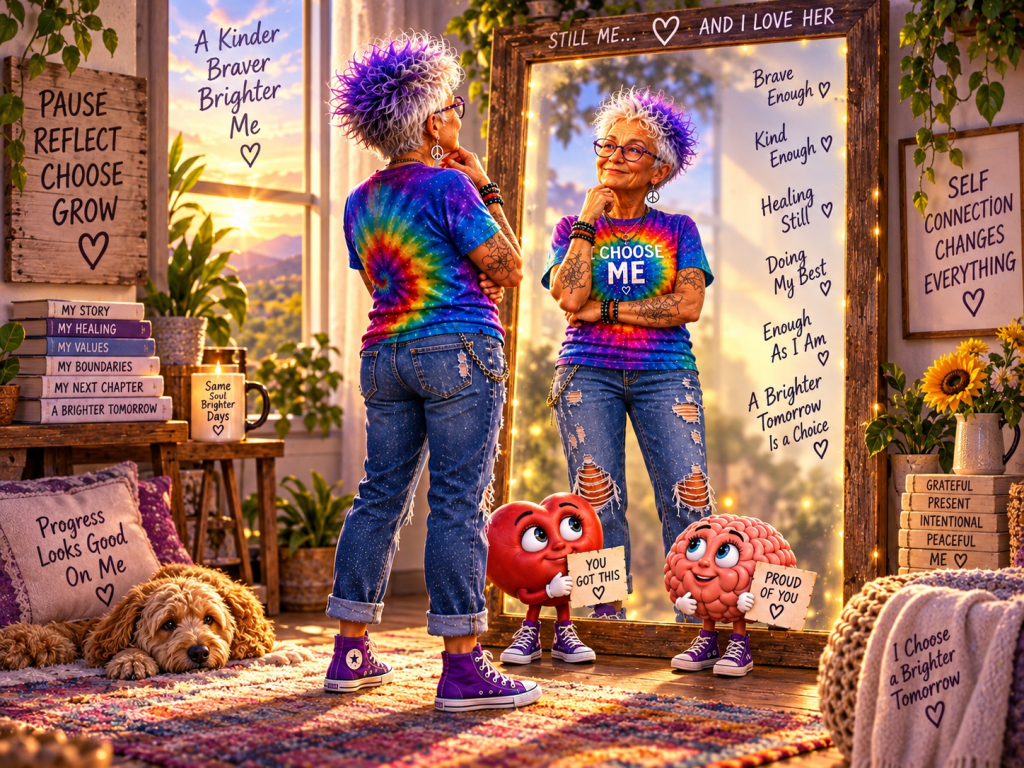
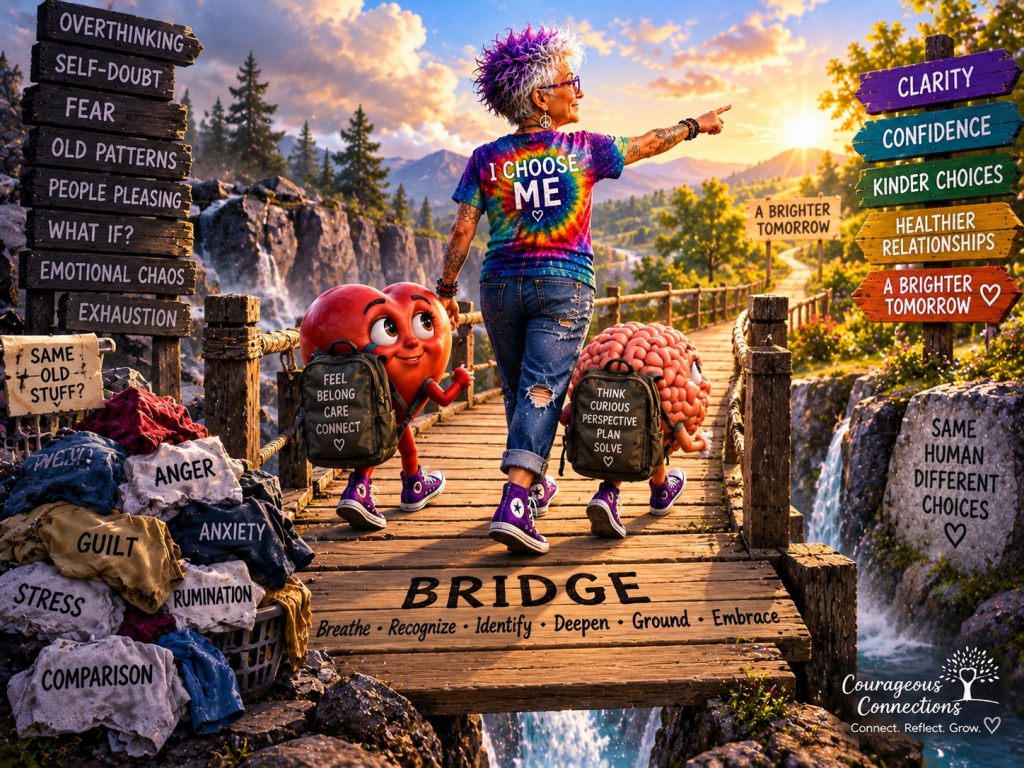
I Choose Me.
I don’t think that phrase means what it might sound like at first glance. It isn’t “I choose me and screw everybody else.” In fact, I think I am beginning to understand that choosing myself wisely makes me more capable of choosing how I want to be with other people.
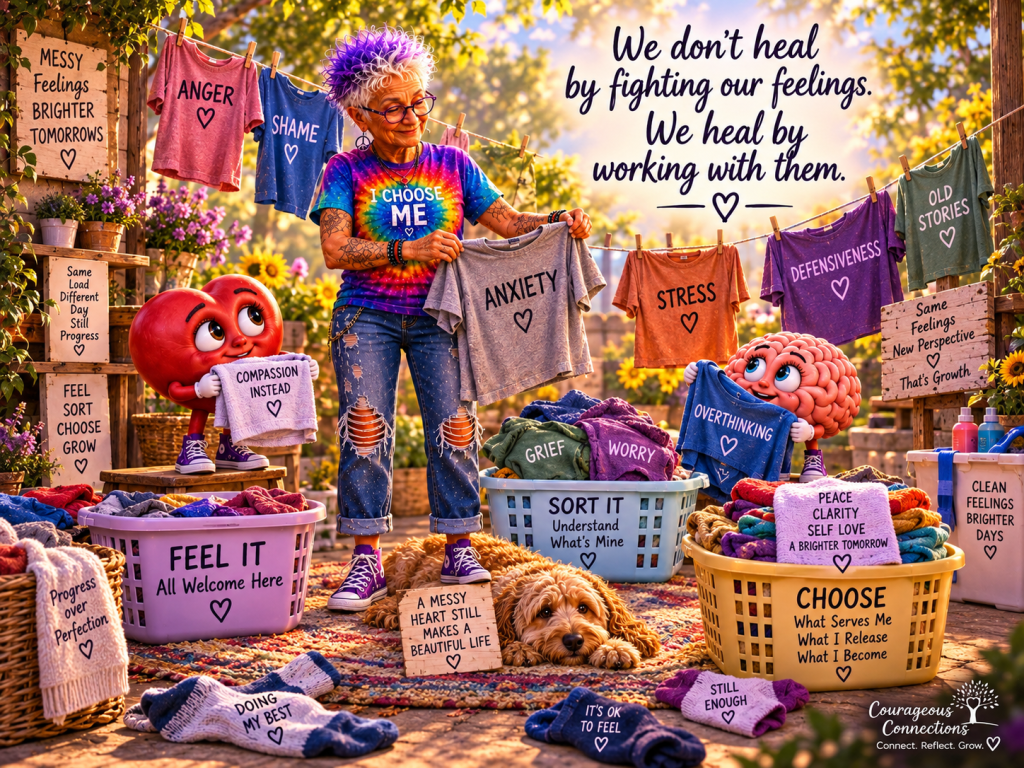
Last year, I wrote about sitting with the emotional mess rather than trying to get rid of it. Anger, grief, shame, fear, all the emotional laundry we drag around whether we acknowledge it or not. I wrote that I was done exiling pieces of myself and that emotion needed to be heard rather than silenced. That was when “I Choose Me” became something more explicit for me: not selfishness, but alignment with myself.
Looking back now, I can see something I couldn’t see while I was living through each individual piece.
Authenticity wasn’t the destination.
It was a beginning.
Trying to understand myself led me toward understanding my values. Understanding my values led me toward the idea that I could choose my response rather than simply react. That led to a bigger question: if I am trying to connect with myself honestly, how do I also connect honestly with other people without either controlling them or abandoning myself?
That is where Courageous Connections started to make sense.
Courageous Connections, for me, is not about everybody agreeing or everybody being nice. Sometimes connection requires disagreement. Sometimes it requires boundaries. Sometimes it requires saying something somebody else doesn’t want to hear. And sometimes it requires realizing that the person who needs challenging is me.
The courage is in staying curious long enough to understand what is actually happening before deciding what I am going to do about it.
And then came BRIDGE.
Breathe. Recognize. Identify. Deepen. Ground. Empower.
BRIDGE gave some structure to something I had apparently been circling around for years. Slow down. Notice what is happening in my body. Identify what I am feeling. Look beneath it. What story am I telling myself? What pattern is showing up? What am I trying to protect? Then ground myself in what actually matters to me and choose the response that best reflects that.
The interesting thing is that BRIDGE did not replace those earlier ideas.
It gathered them.
Authenticity is still there.
Choice is there.
Accountability is there.
Boundaries are there.
Curiosity is there.
Connection is there.
“I Choose Me” is there.
And now the damn thing is growing again.
Lately, I have started wondering what happens when we take the principles behind BRIDGE and stop looking only at the individual.
What if emotional intelligence belongs in families?
Schools?
Workplaces?
Politics?
Government?
Justice?
Economics?
Technology?
Artificial intelligence is becoming capable of helping humanity become smarter at an extraordinary pace. But being smarter and being wiser are not the same thing. That has become one of the central questions I keep returning to: are we emotionally intelligent enough to use all this intelligence wisely?
That question has led to something I am currently calling a Living Blueprint for an Emotionally Intelligent Society.
Living, because I absolutely do not think I have figured out how civilization should work.
That would be one hell of a leap from writing a mental health blog.
What interests me is the exploration.
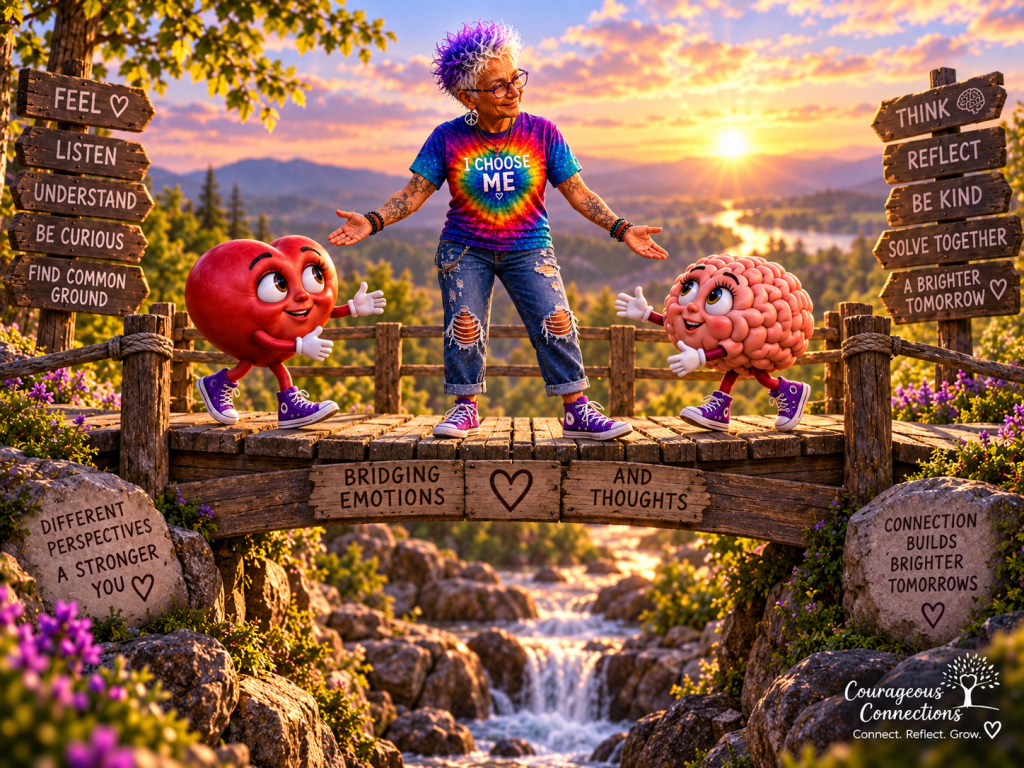
The Blueprint begins with a fairly simple idea: humanity has become extraordinarily intelligent, and perhaps the next stage is becoming emotionally intelligent enough to use that intelligence wisely. It imagines BRIDGE as not only as a personal practice but potentially as a decision-making framework for families, schools, organizations and even governments.
But I don’t imagine BRIDGE as the only road to an emotionally intelligent world. I see it as a potentially useful one. Maybe it is one framework among many. Maybe other people will find better language, better tools or better ways of helping us make wiser choices together.
One idea from these discussions has really stayed with me:
An emotionally intelligent society isn’t one where everyone agrees. It’s one where disagreement becomes a tool for discovery rather than defeat.
That one sentence reaches into almost everything I have been thinking about lately.
Because disagreement is everywhere.
Political disagreement. Social disagreement. Generational disagreement. Arguments about money, gender, education, immigration, AI, government, freedom, responsibility, fairness and who should have what.
We seem to be getting incredibly good at defeating one another.
I’m wondering whether we could become better at discovering something instead.
I have no idea how far this idea goes.
That is probably the most authentic thing I can say about it.
I did not sit down years ago and decide to create BRIDGE, Courageous Connections or a blueprint for society.
I was trying to understand myself.
Then I kept asking questions.
One question opened another.
Authenticity became choice.
Choice became I Choose Me.
Choosing myself raised questions about connection.
Connection became Courageous Connections.
Those questions helped form BRIDGE.
And BRIDGE is now making me wonder whether the same emotional skills that help one person make a wiser choice might also help us make wiser choices together.
Not because BRIDGE is the answer.
I don’t know that it is.
Maybe it is simply one possible road. One way of slowing down, noticing what is happening, asking better questions and making room for something other than immediate reaction.
Maybe that is how ideas are supposed to evolve.
Not by deciding what they are before we begin, but by being curious enough to follow them when they become something more.